
Hi Makenna,
I enjoyed reading your Blog Post #3. Your explanation of how universal design can shape online environments stood out, especially your point about offering students choices in how they engage and express themselves. The example you used really helped me picture how this works in practice. One idea to build on: perhaps you could explore how peer interaction and collaboration also fit into UDL. For example: allowing students to choose between written posts, voice-threads or short video reflections in their peer work. That might deepen the accessibility and flexibility you’re advocating. Overall, your post made me rethink the “one-size-fits-all” model for digital courses. Good work.
RESPONSE TO NEERAJ’S BLOG 3
Hi Neeraj,
I really enjoyed reading your post about Universal Design for Learning. You explained the idea of planning for all learners very clearly. I liked how you showed that UDL is not just about accessibility but about giving every student different ways to learn and share what they know. Your example of using flexible tools for engagement made a lot of sense. I think adding a short example of how this works in a real classroom could make it even stronger. Overall, your post helped me see how UDL can make online learning more inclusive and supportive for everyone.
RESPONSE TO BRYNN’S BLOG 3
I really liked how you explained Universal Design for Learning in simple terms. You clearly showed why planning for diversity helps students stay more engaged. I agree that giving learners multiple ways to interact and show their understanding is key in online classes. Maybe you could also share one short example from your own experience or a classroom you’ve seen, it would make your point even stronger. Overall, your post was clear, thoughtful, and easy to connect with.
Designing for Inclusion and Engagement in Online Learning
In Module 3, Designing for Inclusion and Engagement, we explored how online learning can better support all students by anticipating differences from the start. Instead of reacting to problems, inclusive design means building flexibility and support into the course itself. In this reflection, I’ll talk about what I’ve learned about Universal Design for Learning (UDL), inclusive design, synchronous and asynchronous learning, and interaction and presence and I’ll address a common myth about accessibility.
UDL: Planning for Learner Differences
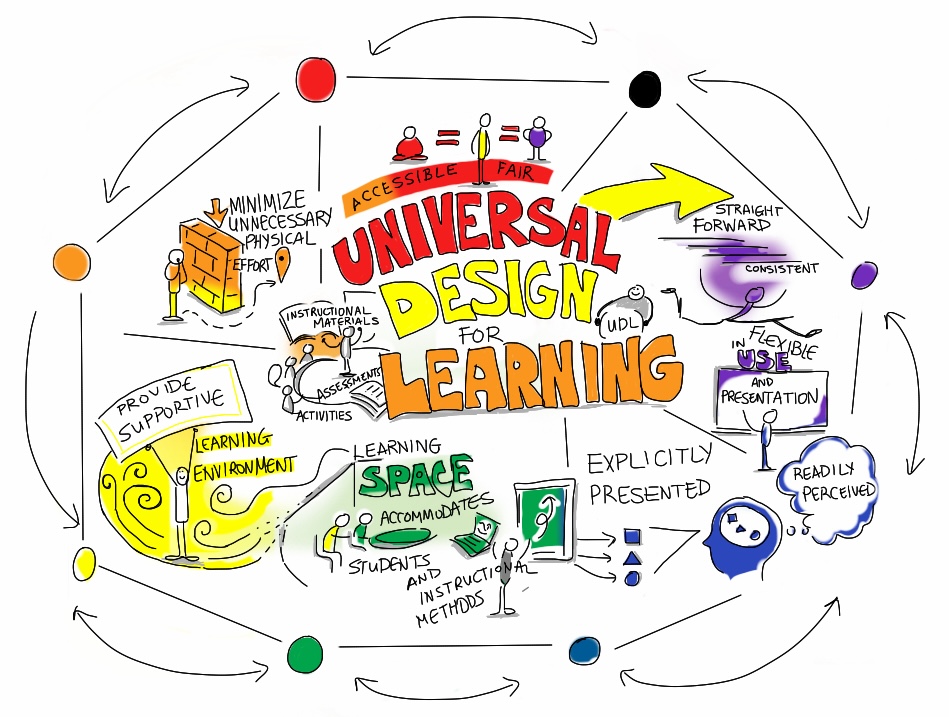
Universal Design for Learning (UDL) is based on the idea that no two learners are the same. According to CAST (2018), UDL encourages instructors to offer multiple ways to engage with material, represent content, and let students show what they’ve learned. Research shows UDL can improve participation and learning outcomes when used effectively (Al-Azawei, Serenelli, & Lundqvist, 2016).
As a student, I’ve felt the difference when UDL is applied. In one of my courses, the instructor started using narrated videos, transcripts, and visual diagrams alongside written slides. It made the content much easier to follow and helped me focus more on understanding rather than just keeping up. These kinds of changes didn’t make the course easier they made it more accessible.
Inclusive Design: Feeling Represented and Supported
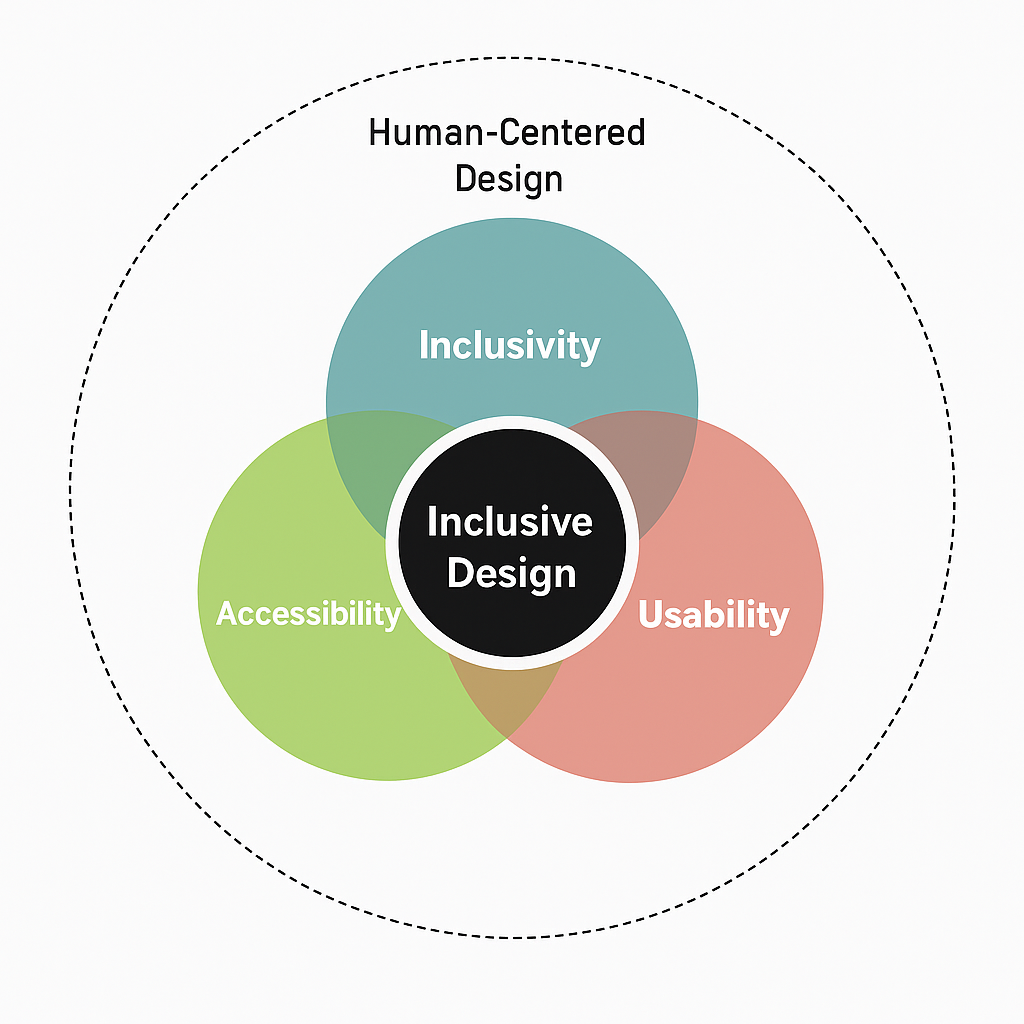
Inclusive learning design means more than just checking accessibility boxes. It’s about making sure students feel like they belong and can succeed no matter their background. Gorski (2019) argues that real equity requires noticing who is included and who isn’t. This includes using examples from different cultures, making room for different perspectives, and designing activities that don’t favor just one type of learner.
One thing I appreciated in a recent course was when the instructor let us choose topics that related to our own lives. It gave me a chance to bring my own experiences into my work, which made learning more meaningful. I also noticed how scaffolding like giving us templates at the start of the term helped me build confidence. When those supports were slowly removed, I felt more capable and independent. This fits with what Module 3 said about “fading scaffolds” over time (designingforlearning.ca, 2025).
Synchronous and Asynchronous: Getting the Best of Both
Module 3 explained the strengths of both synchronous (live) and asynchronous (self-paced) learning. Live classes are great for asking questions and connecting with others. Asynchronous content lets us work when it fits our schedule, which is important if we’re juggling jobs, time zones, or other responsibilities.
From my experience, the best courses combine both. In one class, we had short pre-recorded lectures and then weekly check-ins on Zoom. I could watch the material at my own pace, then come to the live session with questions. It made me feel more prepared and less anxious about keeping up.
This also ties into motivation. Self-determination theory (Ryan & Deci, 2000) says students are more motivated when they feel autonomy, competence, and connection. Having flexible options and real interaction helped me feel all three.
Effective online learning is clear, well-organized, and responsive, with goals, materials, and assessments that align and UDL helps support this by offering multiple ways to access and demonstrate learning.
Interaction and Presence: Staying Connected Online
The Community of Inquiry framework (Garrison, Anderson, & Archer, 2000) highlights three kinds of presence in online learning: social presence (feeling connected to others), cognitive presence (deep thinking), and teaching presence (instructor support and guidance).
I’ve felt more engaged in courses where the instructor posts weekly updates, responds to discussion threads, and gives quick feedback. Even small things like using students’ names or asking follow-up questions helped me feel noticed and valued. When instructors are active and visible, it makes a big difference.
I also learned how important peer interaction is. In classes where we had to reply to each other’s posts or work in breakout rooms, I felt more involved. It reminded me that I’m part of a learning community, not just working alone.
Conclusion
What I’ve learned in Module 3 is that good online learning doesn’t treat students as one-size-fits-all. Using UDL, designing for inclusion, balancing live and flexible learning, and creating strong interaction all help make learning more fair and more engaging. When instructors plan for differences and build community, students like me feel more capable and connected.
References
- Al-Azawei, A., Serenelli, F., & Lundqvist, K. (2016). Universal Design for Learning (UDL): A content analysis of peer-reviewed journal papers from 2012 to 2015. Journal of the Scholarship of Teaching and Learning, 16(3), 39–56.
- CAST. (2018). Universal Design for Learning Guidelines version 2.2. Center for Applied Special Technology (CAST). https://udlguidelines.cast.org
- Garrison, D. R., Anderson, T., & Archer, W. (2000). Critical inquiry in a text-based environment: Computer conferencing in higher education. The Internet and Higher Education, 2(2–3), 87–105.
- Gorski, P. C. (2019). Reaching and teaching students in poverty: Strategies for erasing the opportunity gap (2nd ed.). Teachers College Press.
- Ryan, R. M., & Deci, E. L. (2000). Self-determination theory and the facilitation of intrinsic motivation, social development, and well-being. American Psychologist, 55(1), 68–78.
Designing for Deeper Learning: Reflections on Module 2
Hi, I’m Ravikumar Vashi, a third year Computer Science student at the University of Victoria. Module 2 of EDCI 335 helped me think about learning in new ways. It showed me that how we design learning experiences has a big impact on whether they feel meaningful, confusing, or motivating. In this post, I connect my own experiences with the key ideas of backward design, design thinking, learning outcomes, deep versus surface learning, and project based learning.
Backward Design and Understanding by Design
Backward design is about starting with the end in mind. Instead of asking “What activities should we do in class?” it asks “What should learners know or be able to do by the end?” Once outcomes are clear, assessments and activities can be built to support those outcomes.
I saw the value of this in my algorithms course. From day one, our professor explained that the main outcome was learning to analyze and explain time complexity. This clarity made every practice exercise feel relevant. When we solved sample problems or prepared for exams, we knew exactly how those tasks connected to the bigger goal. In other courses where outcomes were not stated clearly, I often felt like I was just “doing the work” without really knowing why it mattered. Backward design helped me see the difference between meaningful and aimless tasks.
Resource: Understanding by Design overview from Edutopia
Design Thinking: Learning with Empathy and Iteration
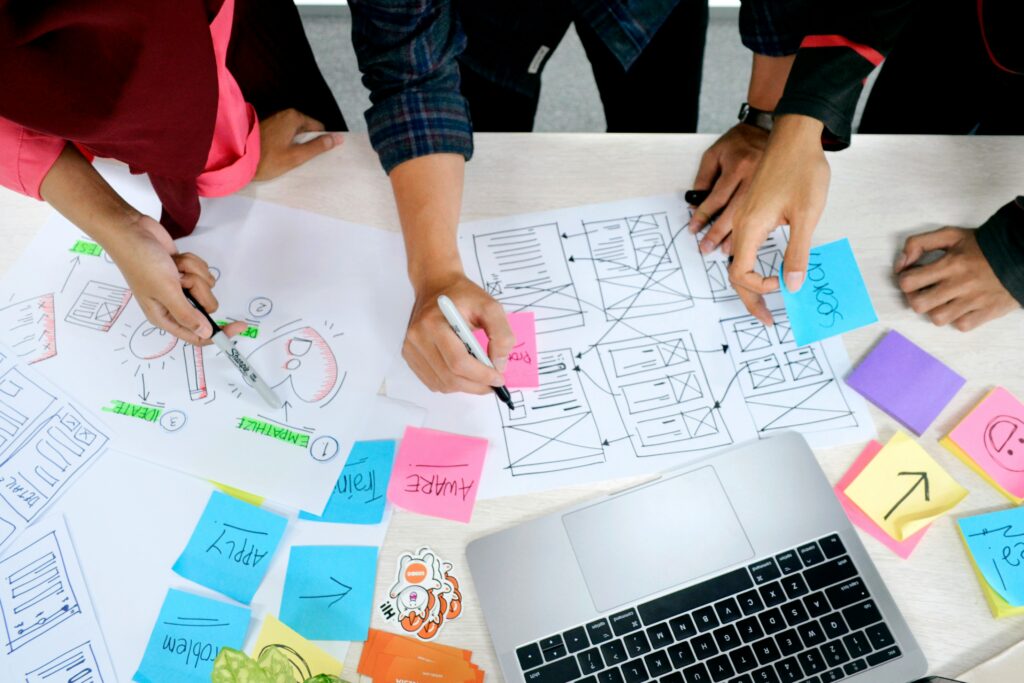
Design Thinking shifts the focus to learners and their needs. It encourages empathy, creativity, and iteration (in general). Instead of designing from assumptions, you listen carefully, build small prototypes, and adjust based on feedback.
In one of my group projects in SENG 310 course at UVIC, we were building an app for campus clubs. At first, my team wanted to add lots of advanced features like chat rooms and complex search options. But after interviewing students, we discovered that most people just wanted a simple tool to find upcoming events. That insight completely changed our design. We built a small prototype of an event listing page, tested it with real students, and improved it step by step. By the end, our app was simple but actually useful. This experience taught me that empathy and iteration often lead to better results than trying to design the “perfect” product from the start.
Resource: IDEO’s Design Thinking toolkit
Ethnography: https://www.interaction-design.org/literature/book/the-encyclopedia-of-human-computer-interaction-2nd-ed/ethnography
Learning Outcomes and Taxonomies
Clear learning outcomes make teaching and assessment fairer. Without them, it is hard to know if learning has happened. Module 2 introduced Bloom’s and SOLO taxonomies, both of which organize levels of learning.
I find Bloom’s taxonomy especially helpful because of its verbs like analyze, evaluate, and create. These verbs make it obvious what kind of work students should do.
- Weak outcome: “Students will understand Python.”
- Strong outcome: “Students will write and debug Python functions to solve real problems.”
The weak version is vague; how do you measure “understand”? The strong one is action based and clearly measurable. SOLO taxonomy is also useful when evaluating quality of responses, but for writing outcomes, Bloom’s feels more practical.
Resource: Bloom’s Taxonomy (Vanderbilt CFT) – PDF with verb lists and explanations Vanderbilt University
Surface and Deep Learning

This module also discussed the difference between surface and deep learning. Surface learning is about memorizing facts or repeating processes, while deep learning involves connecting ideas, applying knowledge, and thinking critically.
I have experienced both. In a statistics course, I often memorized formulas the night before a test. I could solve problems quickly, but once the exam was over, most of that knowledge faded away. That was surface learning. On the other hand, in my database systems course, I had to design a schema for a company. I had to apply normalization, justify choices, and think through possible problems. This task forced me to connect multiple concepts, and I still remember those lessons today. The difference was in the design deep tasks required me to use knowledge in meaningful ways rather than just recall information.
Inquiry and Project Based Learning

Inquiry and project based learning push students to explore questions and create real solutions. They are powerful because they mirror real life situations where answers are not always clear.
In my computer science studies, many projects follow this style. For example, when I worked on a machine learning project, the question was open ended: “Build a model to classify text.” There were many possible paths, so my group had to research, test, and decide what worked best. This kind of work motivated me because it felt authentic and creative. At the same time, I noticed challenges too. Without enough guidance, projects can feel overwhelming. The best projects I’ve done included both freedom and structure an open problem but also checkpoints, deadlines, and feedback along the way.
Resource: Project based learning overview from Edutopia
Closing Reflection
Module 2 taught me that good learning design is intentional. When outcomes are clear, when empathy drives design, when tasks are aligned, and when projects ask for real thinking, learners can move beyond memorization into lasting understanding. For me, the biggest lesson is that design matters as much as content. Going forward, I want to keep reflecting on how I learn and how I can apply these principles when I help others learn.
How I Learn and What Drives Me: A Personal Reflection
Hey everyone! I’m Ravikumar Vashi, a third year student at the University of Victoria studying computer science. I’m motivated to explore what learning means not only for myself but also for people I might teach or inspire in the future as I start EDCI 335 this term.
What Learning Means to Me
Personally, learning is more than just memorizing information. It’s about developing new skills and changing my perspective. Learning, in my opinion, is most effective when it’s applied to real life. For example, I learned how to code in Python last year. The most useful things were training, getting feedback and being able to track my progress. Even though it wasn’t always easy, the opportunity to try, fail and try again made it stick in my head.
Learning Styles and Theories
In this class we’re talking about three learning theories: behaviourism (learning through rewards and practice), cognitivism (focusing on how we remember and process information) and constructivism (learning by connecting new ideas to what we already know).
While constructivism fits me best, I also see how behaviourism plays a role in learning. Behaviourism is all about learning through practice, repetition and rewards. It’s focused on what you can see and measure like getting a question right and getting a check mark, or building good habits through routine.
For example, when I was learning basic math skills in school, behaviourist methods were everywhere. The teacher would give us questions to practice over and over and we would get immediate feedback on whether our answers were correct. Getting a question right felt rewarding and made me want to try harder. Even now, when I need to memorize something or learn a new process step by step, I find that repeating it and getting positive feedback really helps me remember.
So while I prefer to learn by doing and connecting ideas (like in constructivism), I appreciate how behaviourism can help build strong foundations especially when starting something new or practicing important skills.
What Motivates Me
There are four key things that make learning motivating: Attention, Relevance, Confidence and Satisfaction. For me, satisfaction is the most important. If I feel what I’m learning really matters to me, I work a lot harder.
Satisfaction is what keeps me motivated to learn. When I finish a task or overcome a challenge I feel proud and accomplished. That feeling of achievement makes all the effort worth it and makes me want to keep going. Positive feedback or seeing my progress gives me a real boost, learning feels rewarding. Knowing my hard work leads to success keeps me focused even when things get tough.
Learning From Experience
As an adult learner, I bring my past experiences into the classroom. Things I’ve done before; like a job or even a hobby, help me understand new ideas. For example, when I learned about teamwork skills in class, my volunteer for cricket team helped me see how the lessons could work in real life. I also notice that I like lessons that build on things I already know, because it feels less repetitive and more useful.
Looking Ahead
In EDCI 335, I hope to figure out better ways to learn and to help others learn, too. My goal is to take part in discussions, ask questions, and try out new ways of learning to see what works best for me. I’m excited to meet everyone and to hear your thoughts on these topics. If you’d like to share what helps you learn best, I’d love to chat!